Top 5 Omaha Neighborhoods That Shine Brightest During the Holidays
Every December, Omaha families pile into cars with cocoa and a route in mind. And here's what two things all the best light-viewing streets have in common: it's never about one spectacular house, and it never happened by accident. Having hung lights across the metro — from Elkhorn to Bellevue to Council Bluffs — we've noticed the brightest neighborhoods share a recognizable anatomy. Here are the five kinds of Omaha neighborhoods that shine brightest, and how the glow actually spreads.
1. Why do neighborhoods with lit entrances glow first?
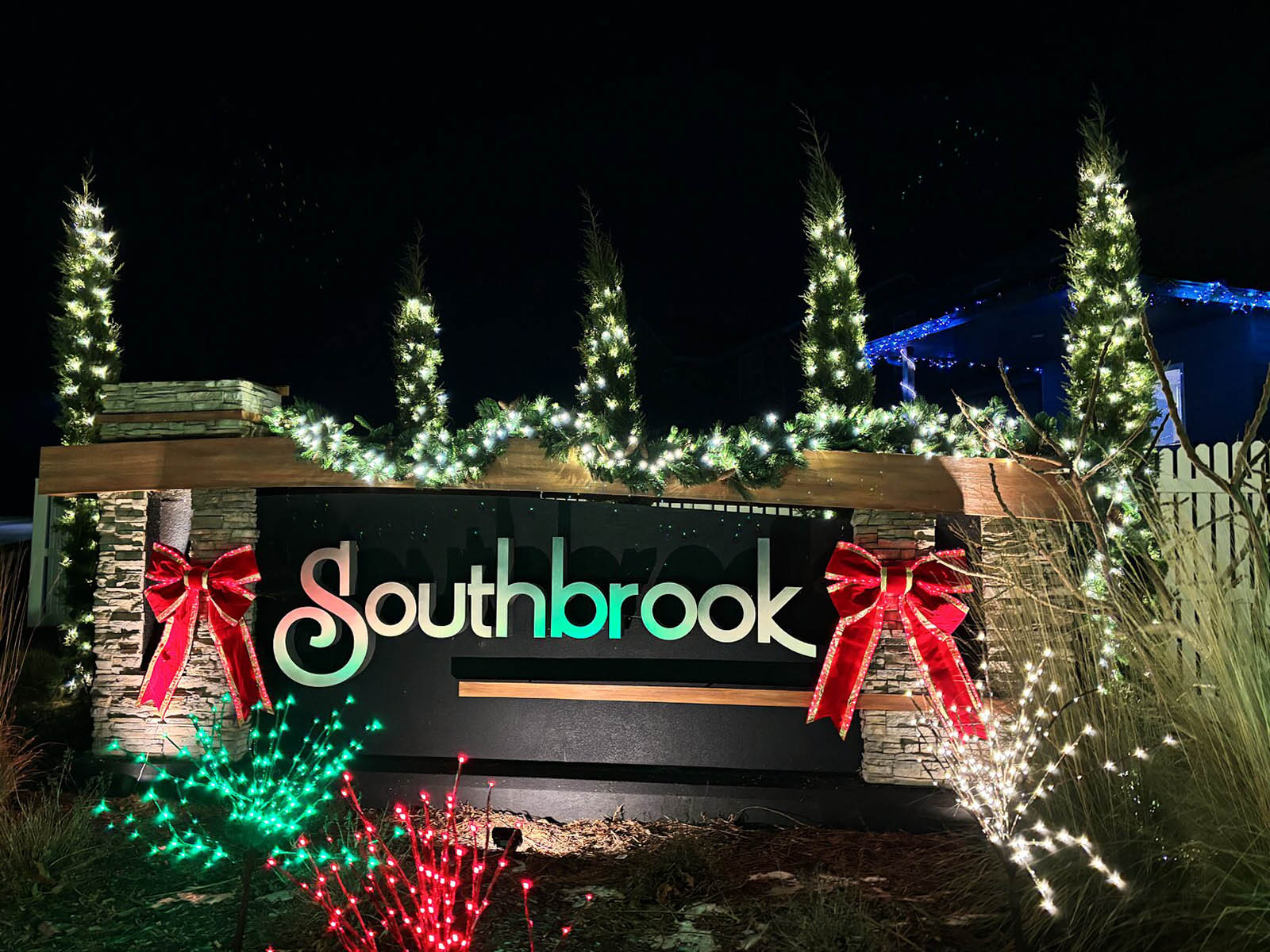
Some of the metro's most magical neighborhoods announce themselves before you see a single house: the entrance monument, trees, and landscaping are lit, and everything past the sign feels ten degrees warmer. A lit entrance gives the whole community a shared identity — it says the season lives here — and it visibly nudges homeowners inside to match the standard. This is real work we do: GlowGetter designed and installed the holiday lighting for the Southbrook neighborhood entrance, and entrance projects like it are among our favorite commercial and HOA installs, because one design lifts hundreds of households at once.
2. What's an "anchor home," and why does every bright block have one?
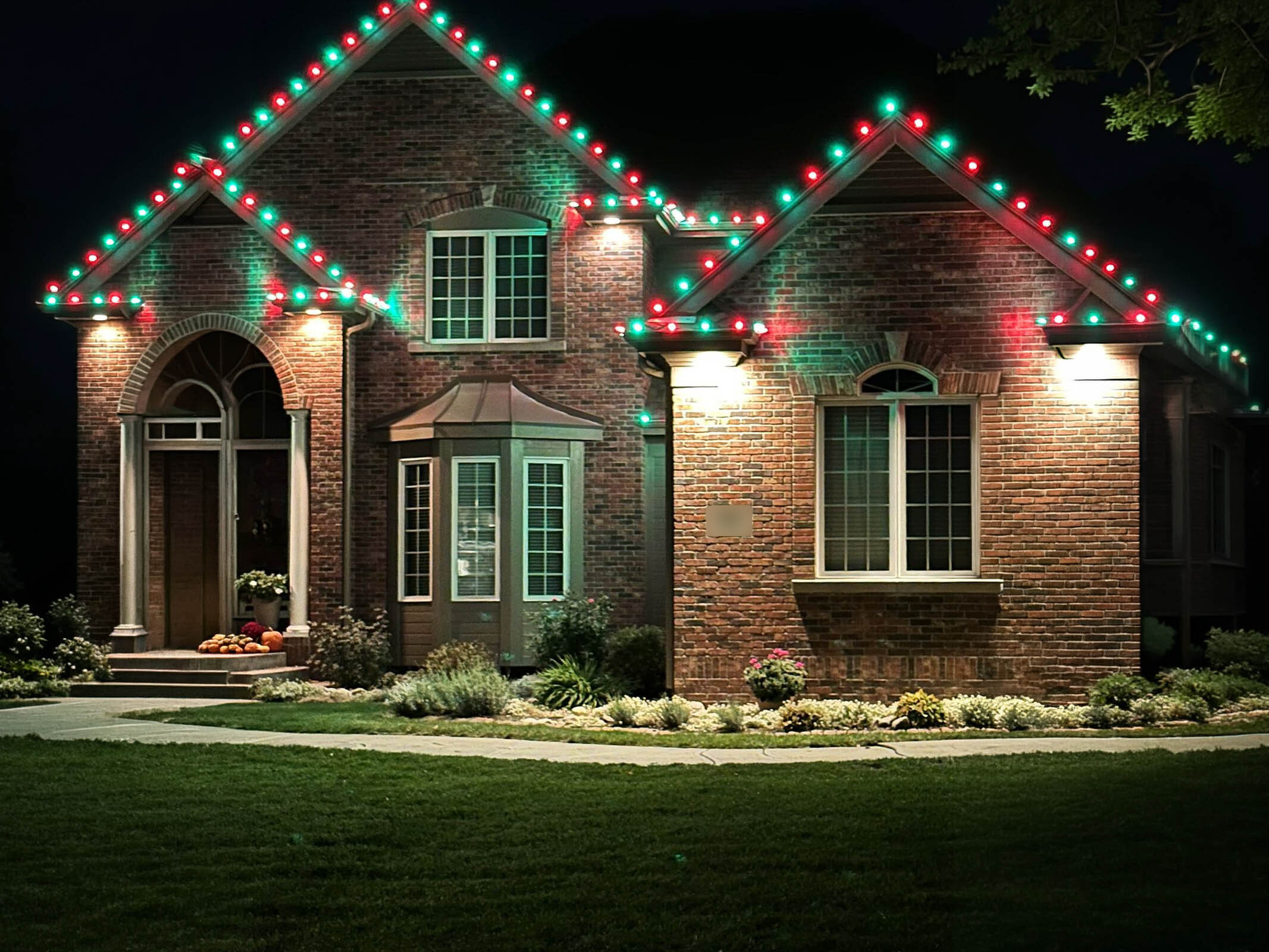
Watch any street's lights evolve over a few years and you'll spot the pattern: it starts with one. One family does a genuinely beautiful display — clean roofline, wrapped tree, warm glow — and the block notices. The next year, two or three neighbors join. The year after, the street has a reputation. We call that first house the anchor home, and being one is more attainable than people think: most professionally designed displays in Omaha run $750–$4,000 all-inclusive, with every tier on our pricing page. Displays are contagious in the best way — light one house well, and you've quietly gifted the whole block a tradition.
3. Why do mature-tree streets feel the most magical?
Omaha's older, established neighborhoods have a lighting superpower growing right in the yard: decades-old maples, oaks, and evergreens. When trunks are wrapped and canopies lit, the light rises off the houses and fills the space over the street — that's the "driving through a snow globe" feeling you can't get from rooflines alone. If your street has big trees, it has more potential than most homeowners realize. (And if it's a newer neighborhood with young trees — give them a tight trunk wrap now and grow into the tradition together.)
4. How does architecture make some blocks natural showpieces?
Certain streets simply wear light well. Steep gables, dormers, varied rooflines, deep porches — architecture with strong lines rewards outlining, and a block where every house has a different silhouette becomes a gallery when they're all lit. This is where design matters most: matching the lighting to each home's architecture (rather than draping the same strand pattern on everything) is the difference between a bright street and a beautiful one. It's the heart of how we approach holiday lighting — every project starts with a rendering of your home so the design fits the house.
5. Why do cul-de-sacs and close-knit pockets outshine bigger streets?
Some of the brightest spots in the metro are tiny: a cul-de-sac, a loop, a two-block pocket where neighbors actually talk. Proximity breeds participation — when you can see five neighbors' houses from your driveway, one great display recruits the rest almost immediately. These pockets often end up coordinating informally: complementary colors, lit mailboxes, the whole circle glowing as one composition. If you live in one, you're sitting on the easiest neighborhood tradition there is to start.
How do you start the glow on your own street?
Simple: go first, and go well. A clean, professionally designed display — even a modest one — sets a visible standard that spreads on its own. Book by October 1 and early-bird pricing takes 10% off; and if you want your street lit every night of the year, permanent lighting starts around $5,000 with 16 million app-controlled colors. Wherever you live in the metro — Omaha, Elkhorn, Papillion, Gretna, Bellevue, Bennington, La Vista, Millard, Ralston, or Council Bluffs — your block's brightest era can start with your roofline.
Or call or text 531-999-6388. We do the work. You enjoy the wonder.